Khmer-American Glazed Donut
នំដូណាត់
The classic glazed raised donut behind California's Cambodian donut-shop story — light, yeasted, honestly made at home in the spirit of Ted Ngoy.
By Cambodian Cookbook Kitchen · June 20, 2026
ភ្នំពេញ Phnom PenhThe Diaspora era, 1975–present
- Prep
- 40 min
- Cook
- 20 min
- Serves
- 12
- Level
- Advanced
The Cambodian donut shop is one of the great, unlikely chapters of the diaspora. When Ted Ngoy arrived in California as a refugee in 1975, fleeing the war that would consume his country, he found work at a donut shop, learned the trade, and within a few years was running his own — then many. What made him remarkable was what he did next: he sponsored and trained fellow Cambodian refugees, families who had lost everything, setting them up behind their own fryers. By the 1990s, Cambodian-Americans owned an outsized share of California's independent donut shops, a whole community rebuilt one pink box at a time. The story, told in the documentary "The Donut King," carries its shadows too — Ngoy's own later ruin — but the shops, and the families they lifted, are real and lasting.
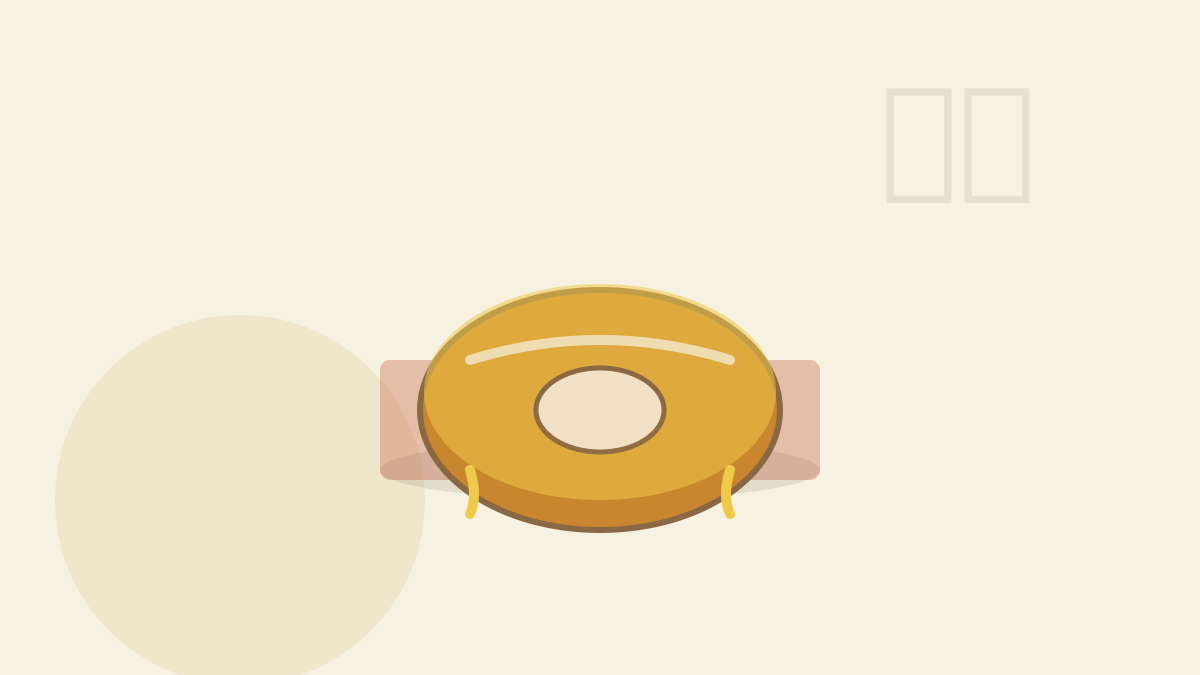
The donut itself is unpretentious by design: a light, yeasted, raised ring under a thin glassy glaze, the workhorse of every one of those shops. Home cooking it honestly means respecting the dough — a proper knead, two patient proves, oil held steady at 175°C. Fry to that deep gold with the pale band around the middle, then dip while warm so the glaze sets to a crackle. It is a simple thing to make well and a hard thing to make great, which is exactly why those families' shops earned their reputation. Make a dozen, share them, and think about the road that brought this ring to a Long Beach counter.
The dough should feel tacky, not sticky, and prove until pillowy and slow to spring back. Underproved donuts fry up dense — give them the time they ask.
ពាក្យពីចុងភៅ · A word from the kitchen
Ingredientsគ្រឿងផ្សំ
Serves 12
០ of ១២ gathered
Dough
Glaze
Methodវិធីធ្វើ
Step 1: Mix and knead
Combine flour, yeast, sugar and salt, then work in the warm milk and yolks to a shaggy dough. Knead ten minutes, adding the soft butter halfway, until smooth and elastic. It should be tacky but not gluey.
Step 2: First rise
Cover and prove in a warm spot until doubled, about an hour. This first rise builds the flavor and the airy crumb that separate a real raised donut from a heavy one.
Step 3: Cut and shape
Roll the dough to 1.5 cm thick and cut rings with a floured cutter. Set them on squares of parchment so you can lift each one into the oil without deflating it.
Step 4: Second rise
Prove the cut donuts, loosely covered, until visibly puffy and slow to spring back when pressed, forty-five minutes or so. Do not rush this — it is the whole difference between light and leaden.
Step 5: Fry
Heat the oil to 175°C. Fry the donuts a few at a time, about ninety seconds a side, until deep gold with a pale band around the middle. Drain on a rack, not paper, so they stay crisp.
Step 6: Glaze while warm
Whisk the glaze smooth and dip each donut while still warm, then set on the rack to let the glaze set to a thin, crackly shell. Warm dipping is what gives that glassy, professional finish.
ឧបករណ៍ · The tools
Equipment
Spider strainer
ចម្រងLift blanched noodles, fried shallots, and spring rolls clean out of hot water or oil in one scoop, before they overcook or turn soft.
Shop on Amazon →Carbon-steel wok
ខ្ទះFor char kroeung, loc lac, and every fast fry — a well-seasoned wok gets screaming hot and moves food fast, the whole point of a stir-fry. Flat-bottomed for a home stove.
Shop on Amazon →
Equipment links are Amazon affiliate links. As an Amazon Associate we earn from qualifying purchases, at no cost to you. Disclosure.
Questions from the kitchen
Who was Ted Ngoy and why does he matter to donuts?
Ted Ngoy was a Cambodian refugee who arrived in California in 1975, learned the donut trade, and built a chain of shops around Los Angeles. He then sponsored and trained scores of fellow Cambodian refugees into the business. By the 1990s Cambodian-American families ran a large share of California's independent donut shops — a genuine immigrant success story told in the documentary "The Donut King."
Why bread flour instead of all-purpose?
Bread flour's higher protein gives the dough the structure to trap gas and fry up light and chewy rather than cakey. All-purpose will work in a pinch, but the texture is noticeably softer and less springy.
My donuts came out greasy — what happened?
Almost always the oil was too cool. Below about 170°C the donuts sit and soak instead of puffing and setting. Keep a thermometer in the pot and let the oil recover between batches.
បន្ទាប់ · Cook next