Samlor Proher
សម្លប្រហើរ
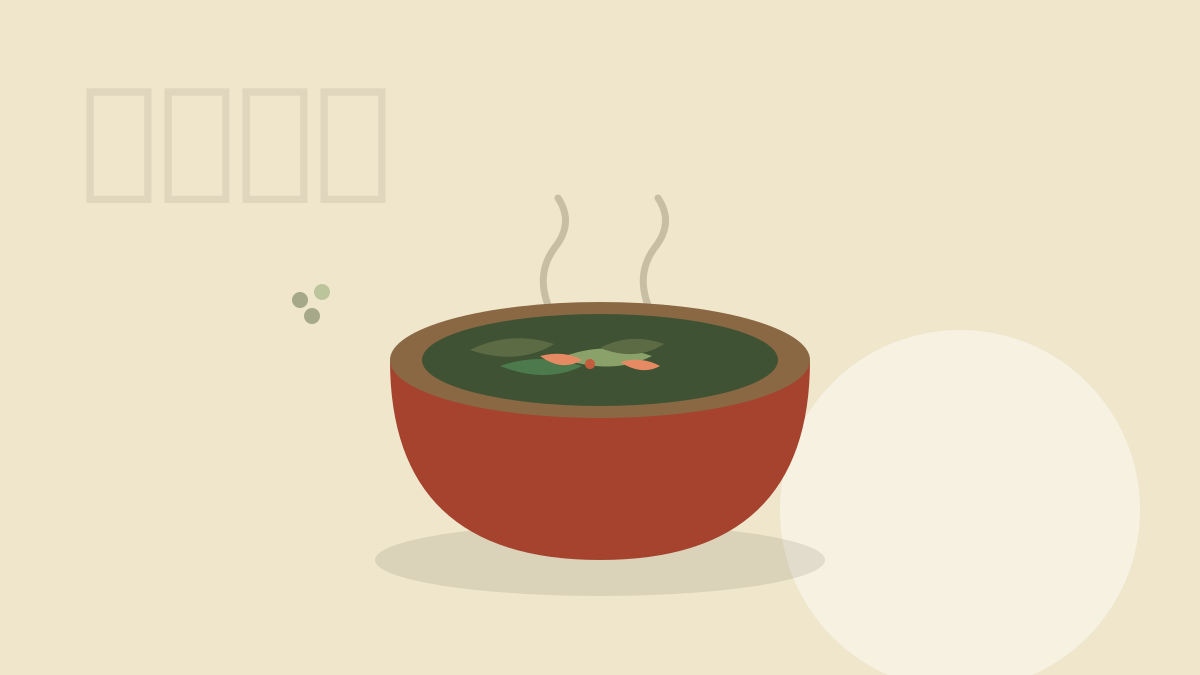
Samlor proher is the deep herbal fish soup of the countryside — a thick green broth of pounded lemongrass, kroeung and a dozen leaves, thickened with fish.
By Cambodian Cookbook Kitchen · July 2, 2026
ទន្លេសាប The Tonlé SapChenla era, c. 550–802
- Prep
- 35 min
- Cook
- 30 min
- Serves
- 5
- Level
- Advanced
Long before Angkor, in the Chenla centuries when the Khmer pantry was settling into the shape it still holds, the countryside was already cooking soups like this one: fish from the water, prahok from the jar, and an armful of leaves from whatever grew against the house. Samlor proher is the least photogenic and most honest of the great Khmer soups — a thick, dark-green, herb-crowded broth that never made it onto a restaurant menu because it belongs to the yard and the garden. It is country food in the truest sense, built from abundance and thrift at once, and it tastes of a whole landscape rather than a single flavour.
To cook it well is to cook generously. Pound the green kroeung coarse; temper the prahok and let it become the soup's backbone; flake some of the fish back in to give the broth a body you can nearly chew. Then pile in the greens — more kinds than seems sensible, sturdiest first, tenderest last — until the pot is as much braise as soup. Finish with a fistful of soft herbs off the heat. What you get is not delicate and does not want to be: it is deep, green and grounding, the kind of bowl that tastes like the place it came from and asks nothing of you but an appetite.
Proher is a soup you build from the garden — the exact leaves matter less than the abundance of them, so gather more herbs than feels reasonable.
ពាក្យពីចុងភៅ · A word from the kitchen
Ingredientsគ្រឿងផ្សំ
Serves 5
០ of ១៣ gathered
The green kroeung
The soup
Methodវិធីធ្វើ
Step 1: Pound the green kroeung
Pound the lemongrass, galangal, turmeric, lime leaf, sawtooth coriander, basil, garlic and shallot to a coarse green paste. Where amok wants a silky kroeung, proher is happy with a rougher pound — the texture becomes part of the soup's rustic body.
Step 2: Temper the prahok and build the broth
Simmer the prahok in a little water, strain out the bones, and add the liquid to the pot with the kroeung and the water. Let it cook fifteen minutes so the raw edges soften and the kitchen fills with the smell that means, to a Khmer, that dinner is close.
Step 3: Cook and flake the fish
Add the fish steaks and poach gently until just done, then lift a portion out, flake it off the bone, and return the flakes to the pot. This flaked fish is the traditional thickener — proher should have body, a broth you can almost eat with a fork.
Step 4: Fold in the greens
Add the sturdier leaves first — water spinach stems, ivy gourd — then the tender tips, cooking each just until it wilts and keeps its colour. A good proher is crowded with greens, half soup and half braise. Season with fish sauce to taste.
Step 5: Finish with soft herbs
Off the heat, stir through the rice-paddy herb and Vietnamese mint and let their scent bloom in the residual warmth. Serve very hot with rice. The soup should taste green, deep and faintly funky from the prahok, with no single herb in charge.
ឧបករណ៍ · The tools
Equipment
Granite mortar & pestle
ត្បាល់THE Cambodian tool. Kroeung is pounded, never blended — the stone bruises fibre and oil out of lemongrass and galangal in a way a blade only chops. Buy the heaviest one you can lift.
Shop on Amazon →Clay pot
ឆ្នាំងដីThe earthenware pot for kho — caramel-braised pork or fish. Holds a low, even heat that keeps a braise gentle and carries it to the table still bubbling.
Shop on Amazon →Tiered steamer
សម្ភារៈចំហុយStacked tiers for amok cups, steamed cakes, and fish — gentle, even heat that sets custards without breaking them. A wide pot with a rack stands in.
Shop on Amazon →
Equipment links are Amazon affiliate links. As an Amazon Associate we earn from qualifying purchases, at no cost to you. Disclosure.
Questions from the kitchen
How is proher different from machu trey?
Machu trey is a clear, sour, quick fish soup; proher is its opposite — thick, herbal, kroeung-based and built on prahok rather than tamarind. Machu is bright and light; proher is deep and green. They are cousins from the same lake, not the same soup.
I can't find half these leaves. Is it still proher?
Yes. Proher is by nature a soup of whatever grew near the house, so use any mix of sturdy Asian greens and soft herbs you can gather — water spinach, spinach, chard, moringa if you are lucky. The spirit is abundance and variety, not a fixed list.
Can I leave out the prahok?
You can, but proher without prahok is missing its centre — the fermented depth is what distinguishes it from a plain vegetable-and-fish soup. If you truly cannot, a spoon of anchovy paste is a polite stranger doing prahok's job, but do try to use the real thing.
បន្ទាប់ · Cook next